Overview
The department offers full-time research degrees at both the M.S. (by research) and Ph.D. levels in Applied Mechanics, Biomedical Engineering, and related interdisciplinary areas. These programs are designed for students who wish to contribute original research to their field under the mentorship of IIT Madras faculty.
Research is active across solid mechanics, fluid mechanics, biomedical engineering, computational methods, AI/ML in engineering, and clinical technologies. Students work within well-equipped labs, benefit from funded travel for conferences, and have access to IIT Madras’s broader research ecosystem.
What the Program Develops
Original Research Independent, publishable research that contributes new knowledge under faculty mentorship
Computational & Experimental Methods Mastery of simulation, modelling, and experimental techniques in your chosen area
Technical Depth Structured coursework and milestones that build deep, specialised expertise
Scholarly Communication Seminars, conference travel, and publication to present work to the research community
Independence & Leadership The ability to define problems and lead research, preparing graduates for academia and R&D
Research Areas
Research is active across three broad areas, each spanning classical foundations and emerging interdisciplinary directions:

Fluid Mechanics
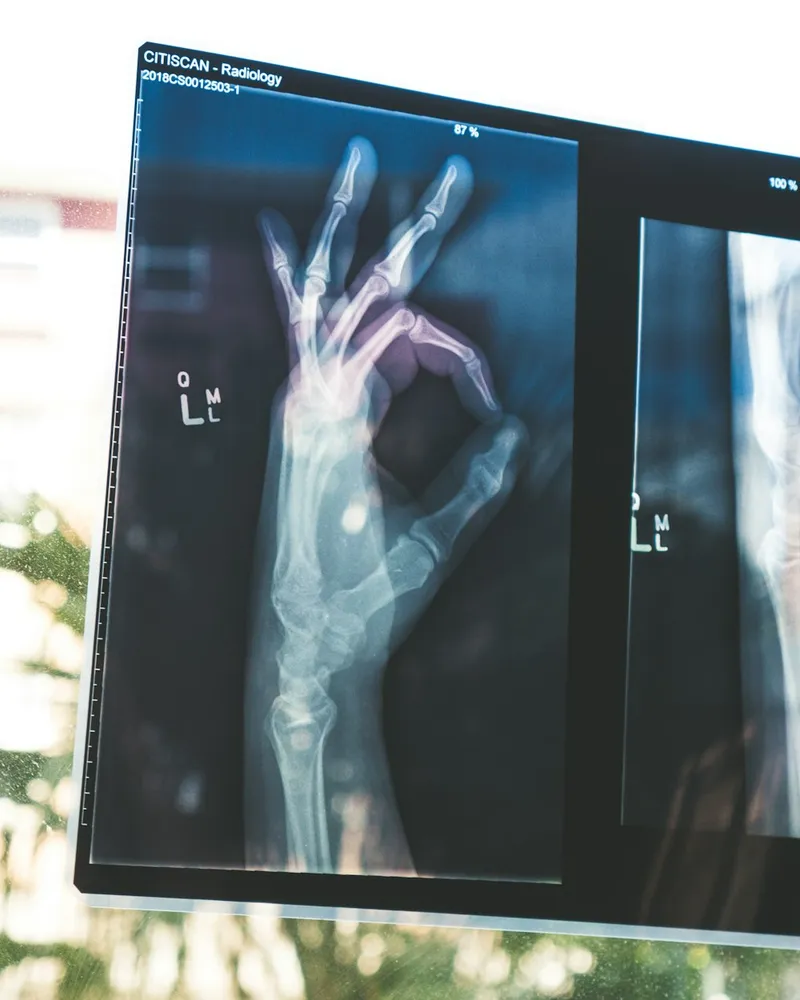
Biomedical Engineering
- Solid Mechanics — Mechanics of Materials · Computational Mechanics · Dynamics & Control
- Fluid Mechanics — Computational Fluid Dynamics · Thermal Systems · Energy & Sustainability · AI/ML in Fluids
- Biomedical Engineering — Modelling & Simulation · Clinical Diagnostics & Implants · Imaging & Instrumentation · Biomechanics · AI/ML & AR/VR in Medicine
Admission Process
Admissions follow a structured three-step process:
- Written Test — Subject-area screening exam
- Research Aptitude Interview — Discussion of prior work, research interests, and technical depth
- Faculty Matching — Shortlisted candidates are matched with faculty whose research aligns with the candidate’s interests
Intake happens twice yearly (January and July). See area-specific eligibility and interview syllabi below.
Eligibility by Research Group
Biomedical Engineering
- B.Tech / B.E. in any engineering discipline, or M.Sc. in any of the sciences (Physics, Chemistry, Biology, Biotechnology, Mathematics, Nanoscience, etc.)
Solid Mechanics
- B.Tech / B.E. in any engineering discipline, or M.Sc. in Physics, Mathematics, Chemistry, or Nanoscience
Fluid Mechanics
- B.Tech / B.E. in any engineering discipline, or M.Sc. in any of the sciences
Financial Support
HTRA Institute-funded Half-Time Research Assistantship — the primary fellowship for GATE-qualified and direct-entry PhD students
Project HTRA Project-funded HTRA for students working on sponsored research projects — equivalent stipend, project-specific work
Project NHTRA Non-HTRA project funding for students supported directly through external grants
R&D Fellowships Fellowships from industry R&D partnerships, DRDO, DST, and other national agencies for eligible candidates
PhD Milestones
Milestone
Deadline
Description
GTC Meeting
Within 6 months
Graduate Training Committee meeting to confirm research area and plan
Coursework Completion
Within 2 semesters
Mandatory courses as specified by the department and thesis supervisor
Mid-Term Review
Within 18 months
Formal assessment of research progress by committee
Open Seminar
Within 27 months
Public seminar presenting research findings to the department
Thesis Submission
Within 3 months of seminar
Submission of final thesis for evaluation
Interview Syllabi
Area-specific interview syllabi are available for download:
Contact the department office for the most current syllabus links.
Eligibility & Admissions
Applications are submitted through the IIT Madras research admissions portal. Shortlisted candidates are invited for written tests and interviews.
- Research admissions: research.iitm.ac.in
Curriculum — JDP in Biomedical Devices and Technology (Jointly offered by IITM–SCTIMST–CMC)
The Ph.D. in Biomedical Devices and Technology is offered jointly by IIT Madras, the Sree Chitra Tirunal Institute for Medical Sciences and Technology (SCTIMST), Trivandrum, and Christian Medical College (CMC), Vellore. Before the first semester, students attend a three-to-four week orientation programme in July at SCTIMST/CMC, covering an introduction to hospitals and medical devices, visits to industry, and introductory sessions on biomaterials and medical device technology.
- This institute program is coordinated by AMBE department
All students must complete the following compulsory requirements, in addition to electives selected with the Doctoral Committee (DC):
Compulsory Requirements
Institution
Requirement
Credits
IITM
Introduction to Research (ID6020, ID6021)
6 + 6
IITM
AM BME Core Basket (one core course)
9
CMC
Functional Anatomy and Physiology (theory + lab)
4 + 2
—
Two Elective Courses (DC-approved)
6
CMC / SCTIMST
Clinical Attachment (one semester)
3
Total course credits: 36
AM BME Core Basket (choose one)
Course
Title
Credits
AM5119
Physiology for Engineers
9
AM5010
Biomechanics
9
AM5520
Medical Electronics
9
AM5510
Biomedical Signals and Systems
9
AM5050
Biomedical Sensors and Measurements
9
AM5017
Statistics for Biomedical Engineers
9
AM5120
Biomaterials
9
AM5130
Quantitative Physiology
9
AM5016
Numerical Methods in Biomedical Engineering
9
Suggested Elective Courses
Venue
Course
Credits
SCTIMST
Tissue Engineering and Regenerative Medicine
3
SCTIMST
Introduction to Epidemiology
3
SCTIMST
Advanced Polymer Science and Technology
3
SCTIMST
Analytical Instrumentation and Medical Laboratory Equipment
3
CMC
Introduction to Digital Signal and Image Processing
3
CMC
Physiological Systems Modeling
3
CMC
Rehabilitation Engineering
3
IITM
BT622 Introduction to Computational Neuroscience
3
IITM
AM519 Haptics in Biomedical Engineering
3
IITM
BT520 Principles of Neuroscience
3
IITM
BT518 Biological Vision
3
IITM
BT676 Drug Design and Medicinal Chemistry
3
IITM
BT655 Medical Informatics and Bioinformatics
3
IITM
BT673 Ergonomics
3
IITM
Bio-fluid Mechanics
3
IITM
MS693 Management and Entrepreneurship
3
IITM
BT653 Biostatistics
3
IITM
BT652 Clinical Biochemistry
3
This elective list is not exhaustive — any other course approved by the guide and Doctoral Committee can be taken.
Clinical Attachment
Hospital Exposure Introduces students to the clinical environment and routine hospital activities
Clinical Reasoning Builds understanding of the methods clinicians use to investigate and diagnose problems
Clinical Communication Develops the language and interaction skills needed to work effectively with clinicians
Problem Identification Students identify problems faced in a typical clinical environment and propose innovative solutions
Students are assigned one or more clinician mentors who meet with them regularly to discuss and assess their experiences, with a focus on equipment management, safety evaluation, and preventive maintenance.
Thesis & Timeline
Thesis topics are allotted in the first semester based on student choice and guide acceptance, jointly floated by two faculty members — one from IIT Madras and one from SCTIMST or CMC. Coursework is preferably completed within two semesters, with the comprehensive exam taken by the end of Semester 2 and completed by the end of Semester 3. Students entering via the M.Tech route who are oriented toward in-depth research can upgrade to the Ph.D. at the end of Year II, governed by guidelines similar to the existing IIT Madras M.S./M.Tech-to-Ph.D. upgrade policy, with exit options mirroring those in force at IIT Madras.
Career Pathways
Research graduates from AMBE have gone on to:
Faculty & Academia
Postdoctoral Research

Defence, Space & Aerospace R&D
Healthcare & Medical Technology

Energy & Computing R&D